
Recent articles for international organizations
https://plantbasedtreaty.org/the-amazon-is-on-fire/
https://plantbasedtreaty.org/la-climate/
https://plantbasedtreaty.org/biocyclic-vegan/
https://plantbasedtreaty.org/inspiring-change-towards-a-more-vegan-supply/
https://plantbasedtreaty.org/why-the-live-export-of-unweaned-calves-from-ireland-should-be-banned/
https://plantbasedtreaty.org/plant-based-transition-in-the-netherlands/
https://plantbasedtreaty.org/edinburgh-agrees-a-plant-based-treaty-action-plan/
https://plantbasedtreaty.org/huge-if-london-will-lead-the-way-forward/
https://plantbasedtreaty.org/haywards-heath-endorse-pbt/
The Dairy industry
I am currently doing some in-depth writing about the global dairy industry – the hidden truths about the dairy industry and highlighting both the ethical aspects as well as the climate devastation it causes. I feel a moral obligation to speak up for the cows and calves suffering in the dairy industry, an industry still a blind spot for most people. I will start sharing some of the interviews here on this platform.
No hope for the dairy industry
- A brutal and extremely cruel global industry is being revealed
ARM Investigations, The Animal Recovery Mission, was founded in 2009 by Richard “Kudo” Couto, and started as an animal saving mission. Today they are doing investigations all over the US with a special focus on the dairy industry, a violent and cruel industry, well hidden from the public’s eye.
Richard never planned to start his own organization, but circumstances made him take the decision and he set up ARM to combat the issues despite danger or political interests.
Today he has been vegan for nine years. Every time he investigated an industry; he realized the unbearable cruelty and more and more food was being removed. The very first thing he took away from his diet was dairy.
“I knew that dairy was the most toxic thing I could put in my body, and I knew it was having a bad impact on the environment. But number one was the cows. I knew they were enslaved, and how brutal lives they had. The long-term confinement and long-term torture, they live under, really resonates with me. It is a real problem for me and that’s why ARM has really wrapped its arm around the dairy industry. We were lied to as children, believing in the pictures from the dairy industry. “
Dairy investigations
The first dairy investigation ARM did was in 2017. They investigated several different dairy farms simultaneously. The abuse revealed was horrific. Since then, they have done many investigations. And what they see is that the abuse in the dairy industry is just getting worse. Not only at megafarms with 40,000 cows. ARM has seen it on family farms and middle-sized farms as well. For a long time, Richard has witnessed the worst imaginable cruelties towards farmed animals at illegal slaughterhouses. But still, he emphasizes that the majority of the crimes against animals are in the legal animal agriculture, globally.
“For our investigations in 2017 we did the largest animal agriculture investigation in the history of the planet. We went undercover at a small 100 cow dairy, at a mid-sized dairy, at an up-sized dairy, and at a mega farm with 40,000 cows. All at the same time.”
The results were shocking and the evidence showed that the cruelty and brutality was the same across the board. At the small family dairy farm, the cruelty was at times even worse.
“And that’s what we wanted to show the greater public. It is not “all loved cows” in the small dairies. When picking up your milk at a small family farm, they are at their best behavior. But the cruelties happen when there are no visitors.”
What they saw was gut wrenching. The small newborn baby calves were being kept in the closures in the middle of the fields, with no shelter at all.
“In the summer heat they were being cooked alive. When it was flooded in the area, the babies were at times a foot and a half in water. This meant they could not lay down, because then they would drown. The death rate was striking. There were incredibly high numbers of babies dying.”
They watched how cows were being whipped, beaten in the enclosure areas they were living in, they had mud up to their knees, living under very unsanitary conditions. Some of the cows were being buried alive, as well as the calves. And all this happened on a family-owned farm.
“The dairy industry is so inherently violent and cruel. Just taking a newborn calf from its mother at birth is very cruel. And that happens in all dairies all around the world.”
Normalized cruelty
For many working in the animal agriculture industry the violence becomes normalized, and he has met many people who have been working in that environment for years. Richard emphasizes how the human’s species is a very adaptable species; when you are put into a violent situation many times you become violent, without even knowing it.
“Our investigations only last for three months, but I have seen the transition even from some of our own employees who all love animals. Many times, they mentally change throughout the investigations. And when I see them being harder on the animals, I have to bring them in and show them the video. Then they always start to sob, unaware of what they have done.”
They are doing it because everybody around them is doing it. Therefore, they monitor their investigators very closely.
“We have a great team right now, but it happens. On top of it you are on a time scale and are forced by the management to move faster, as fast as possible, because you are now under time restraints. It is a lot of money wrapped around the industry. Many work six days a week, 14-hour shifts, barely having time to get back home to sleep. Being on that schedule for years, the brutality easily becomes normality. “
Worse cruelty despite welfare policies
ARM’s 2019 dairy investigation at Natural Prairie Dairy and Fair Oaks Farms revealed Coca-Cola and Fairlife’s direct ties to industrialized animal cruelty.
In response to public outrage, Coca-Cola pledged over $40 million in animal welfare reforms, promising audits, employee training, and video monitoring.
However, ARM’s latest findings prove these measures were nothing more than corporate deception. Systemic abuse persists and has even become worse. Recently a new animal cruelty scandal was exposed by ARM Investigations involving suppliers to the same company, Fairlife owned by Coca-Cola. ARM has released horrific and brutal footage from two different Arizona dairy farms after a six-month investigation during 2024. They found shocking and frequent animal cruelty at Butterfield Dairy and Rainbow Valley Dairy, both owned and operated by the DeJong family.
At Butterfield Dairy, they captured for instance footage of workers rough-housed confused newborn calves and shoved feeding tubes down their throats, leading to fatal internal injuries and trauma. Their carcasses were left scattered across the property or sent to a methane plant for fuel. At Rainbow Valley Dairy, pregnant cows endured continual beatings, their tails broken, and electric prods used to force compliance. Managers botched euthanasia procedures, shooting cows in the neck and leaving them to suffer prolonged, agonizing deaths.
They also witnessed calves violently separated from their mothers, confined in tiny wooden crates, so called veal crates and subjected to relentless abuse by workers and managers. Workers punched, kicked, whipped, and dragged calves by their ears, tails, and legs, resulting in fractures, internal injuries, and painful deaths. Calves were also denied food, water, and medical care, left to suffer from fatal infections.
In 135°F heat, calves collapsed from dehydration and exhaustion, left to die in filthy conditions.
“They violated all their animal welfare policies. In Arizona, they had in place all of the policies that they were demanded to put in place; training for the employees, cameras in the cow areas, veterinarians, cruelty experts, and an animal cruelty advisory committee that Coca-Cola set up. But incredibly enough, the cruelty was worse with those policies in place, than it was in 2019 before the policies. Which tells the common thinker that there is no hope for the dairy industry. “
Harder to reach media because of money
In 2019 Coca-Cola sent out press releases admitting what had happened, and the president went on camera and explained the shortcomings, and that changes were being made.
“They figured out that staying silent and not addressing the issue – the media won’t report as strongly without a response. Coca-Cola also used their marketing power and called all the big media networks that at the time developed stories on the issue. They basically said that if they would run negative stories on them, their marketing budget is now pulled from their network. Very quickly the media shut down in the US. It was the first time I saw that happening.”
This is a new experience for him and ARM must adjust for their future investigations. And they can see a big change in the interest from media all around the world.
“We have maybe done a hundred stories, when typically, we at this type of case would have done 5000 by now, globally. It would have been a global monstrous outcry. But now a lot of publications won’t report on it, because of money. When you go up against the sixth largest company, which Coca-Cola is, then this is what we see.”
He believes education is key to achieve change and describes how they have done thousands and thousands of stories and hundreds of investigative report stories during the years. Channels such as National Geographics, Discovery Channel and History Channels have broadcast their investigations and highlighted their work on their shows. Richard also encourages organizations and people to spread their material and footage and utilize it and send it out to their supporters and followers.
“Education is the greatest part and we really like people and organizations to use our material as an education tool. Because the only thing that is going to stop the dairy industry is people stop buying milk and cheese.”
90 percent of all veal calves come from the dairy industry, a cruel and inhumane industry. Richard describes how many people have a hard time watching their videos. Because seeing innocent animals being tortured is hard. But people need to know what is going on behind closed doors and the animals cannot speak up for themselves.
Since the investigation ARM have had protests in multiple cities, and multiple protests are being scheduled as we speak. Four different serious lawsuits have also been filed on Coca Cola.
“We didn’t go undercover in just one farm, we did it in two. Basically, to show, it is not just one supplying farm, but two independently run dairies. And they were guilty of almost the same horrific crimes as one another supplying Fairlife and Coca-Cola.”
What we see in the investigations are cruelties beyond words. Still Richard is not surprised, apart from that the cruelty was even worse since 2019 despite the policy changes that followed.
“One thing that Coca-Cola is not going to get away with at Butterfield dairy is the conditions of the barn with the 5000 newborn babies. The crates the calves stood in, were veal crates that are illegal in the state of Arizona. The babies could not even stretch out their limbs to sleep, because they were so small. They could not turn around. And that is what we typically put veal calves in, in the US.”
They are very company specific, and dairy specific when they go undercover. At the latest investigation it needed to be suppliers of Fairlife and Coca-Cola in Arizona. At Butterfield, the undercover investigator was hired right away, for the calf barn with 5000 calves. The worker’s job was to go around to all the hutches and inject these small calves with drugs. Being in constant contact with Richard, the drugs that were too harmful to the babies the investigator would pour out. Some of the drugs were helping the calves to fall asleep so they would not try move around in the pens, so small they could hardly move.
“The needles are fat and thick and extremely painful for the babies. All calves were injected eight times a day. People don’t really think about it. The screams just from the needles itself are horrifying.”
ARM is running the biggest Farm Animal Sanctuary in Florida
Beside the undercover investigations that ARM does, they are also running the largest Farm Animal Sanctuary in Florida, ARM Sanctuary, with around 700 animals.
They own a large compound in the state of Florida where all their investigators are trained at the sanctuary. But they keep this quiet for protection of their animals and are not open to public.
“We have created a model, the first of its kind. When we hire investigators, our employees go straight into the sanctuary and work with the animals for at least three months.”
By doing that they are learning how to work at a farm, and handle different animals such as baby calves, dairy cows, goats and chickens, depending on what farm they will investigate. After the investigation is done, the investigators are back to the sanctuary in Florida. Many get PTSD working in farm factories, and the healing process that many experiences being at the sanctuary, is profound.
“Handling the animals that they helped rescue in past investigations, makes people come down from the high stress levels. And typically, after working three months in the sanctuary, they are so mentally and physically healthy, they are ready to go again.”
Every animal is rescued thanks to their undercover investigations, either from illegal slaughterhouses or other investigations they have done. They are today living their best lives, loved and protected.
“Probably half of the cows come from the dairy industry, but I can’t get into how we got them.”
Anne Casparsson
How dare we?
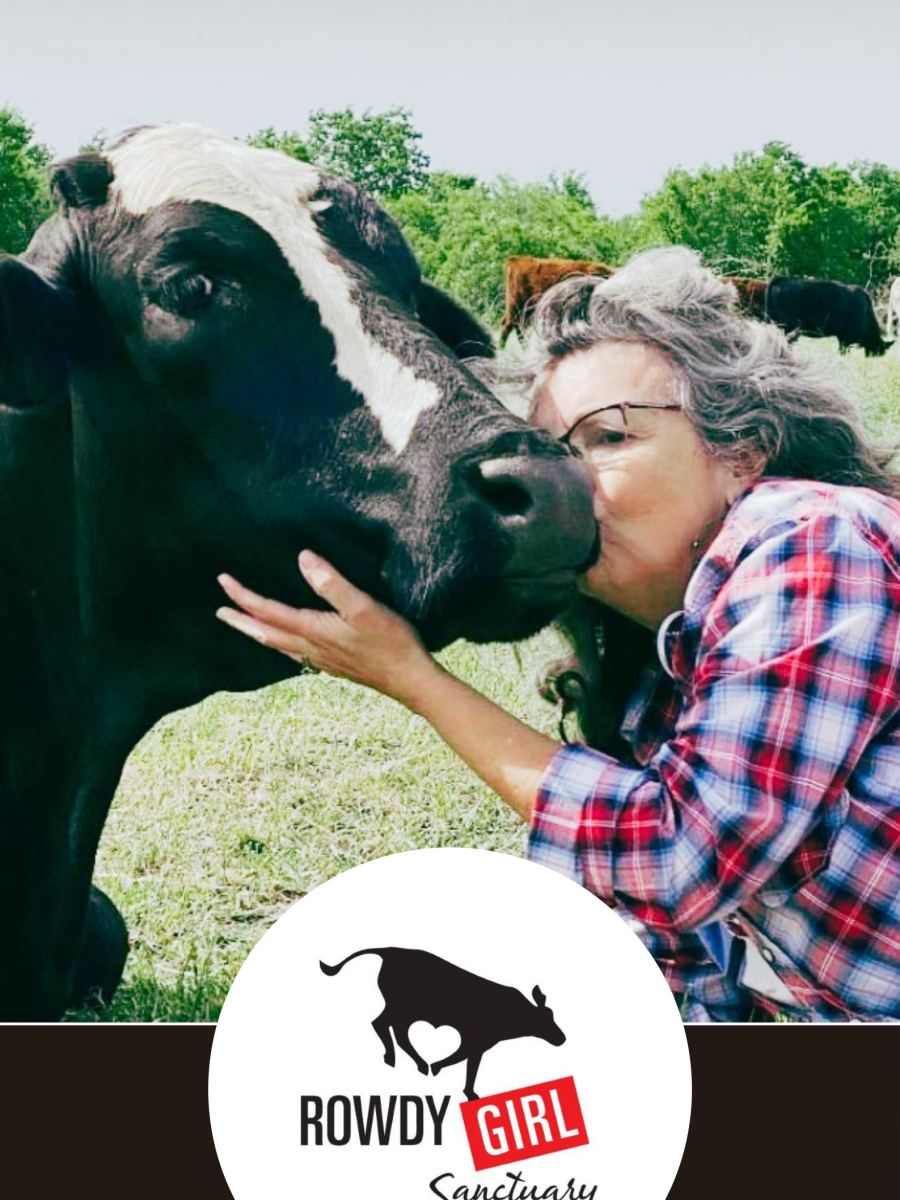
Renee King-Sonnen is the executive director and founder of Rowdy Girl Sanctuary that was established in 2015. It is the first beef cattle ranch to go vegan and rescue the cows that they would normally send to slaughter.
“We’ve gained a lot of notoriety, because of our story. I guess, it hit a nerve with not only vegans and animal rights folks, but also with other farmers and ranchers that were very curious about our story. And it went viral,” Renee says.
Today Renee is world known for her advocacy and voice for the animals, as an ex-rancher from Texas and is a global spokesperson for the animals. Renee has been on major news outlets all around the world and recently a documentary about their journey was launched, called Rowdy Girl. It showcases the inspiring work of Renee King-Sonnen and proves that there is a common ground between farmers and vegans: a shared mission of compassion and sustainability. Renee is currently also writing a book about her life and her journey from being a cattle rancher to becoming a vegan activist.
Lately, a number of investigations at dairy farms have been exposed, in different parts of the world, both in the US and Europe, by for instance ARM Investigations and Animal Justice Project. We have witnessed how the extreme cruelties in the global dairy production are common practices and routine, despite the fact that many still believe that it’s a wholesome industry.
“It is heartbreaking”, Renee says. “You know, the dairy industry is the meat industry. And it is worse than anybody would ever imagine. Many people think that they’re not hurting an animal when they drink milk. It’s just amazing to me the amount of really good people that think that drinking milk is harmless.”
The dairy industry
“From the fact that they have to ejaculate a big 2000-pound bull to obtain their semen, how dishonoring that is. And then they put the semen in some sort of device and put the long glove on the hand. Then they put their hand up inside the rear end of the dairy cow, who’s usually chained and unable to move, to put that sperm inside of the cow. Usually this is right after a cow has given birth and has had the baby taken away from her. The mama cow is just in grief. There’s no dignity at all. It is rape.”
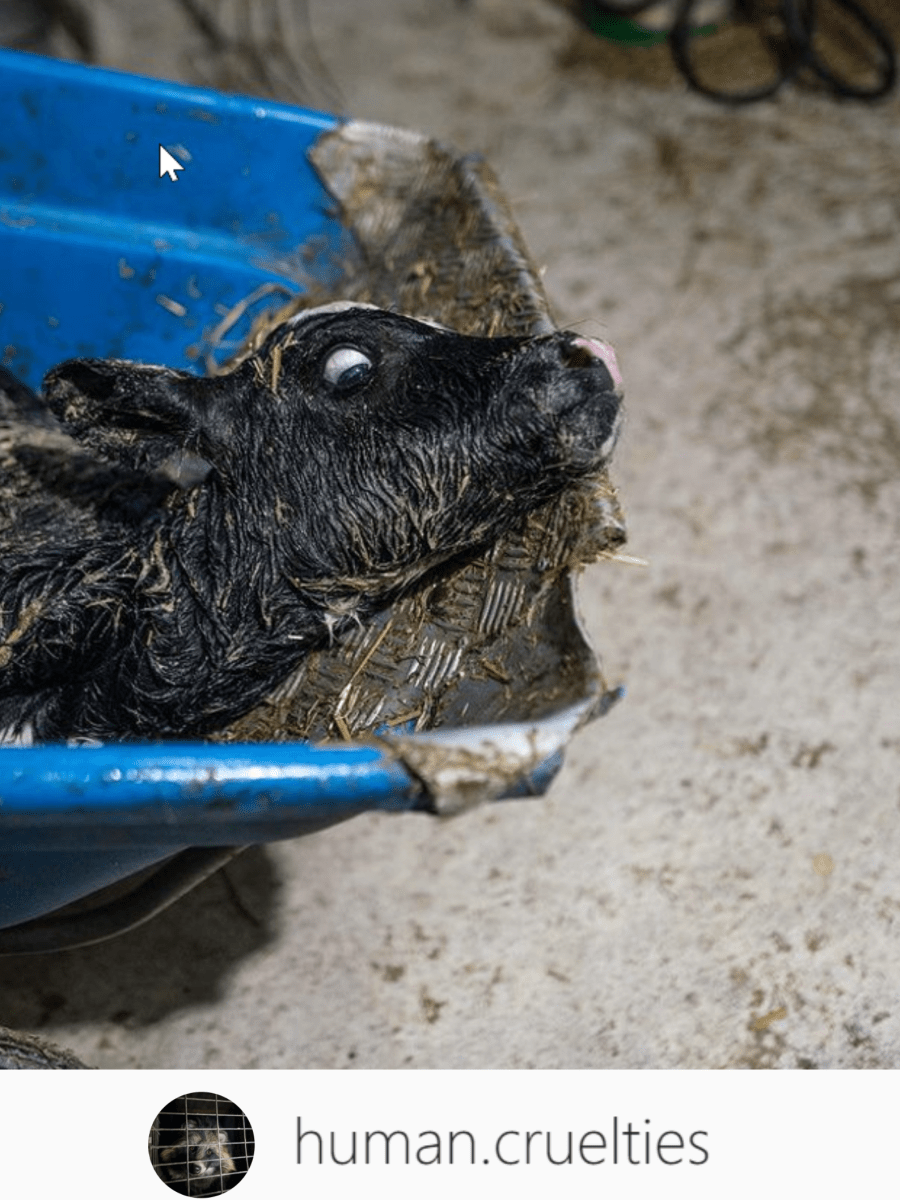
Grieving cows and calves crying for each other, sometimes for days and even weeks, is normal in the industry. The umbilical cords are usually still on these babies when they are separated, and they are just thrown in wheelbarrows like trash. If they are males, they are often killed on the spot or being put in small veal crates.
“The industry doesn’t need males. The males are useless in the dairy industry, seen as a byproduct. The little baby females will just grow up to be dairy cows, put in small veal crates. These babies have become units of production and are not seen as sentient beings. But in fact, they are just like anybody’s child. They need warmth, they need protection, and they need their mother. They need milk, sustenance, sunshine, air, and clean water. But they are deprived of all of that, just so human beings can have access to the milk.”
All around the world we can see how newborn baby calves are being treated in the worst possible way: male calves are starved to death, frozen to death in small crates, denied water and food, or exposed to heat and bad weather as well as being treated with violence. How can we best change the narrative from here, despite the fact that many people are indoctrinated through generations of belief systems around eating animals and drinking milk.
As a former cattle rancher Renee has the ability to really make people listen. She is walking the talk and has the authority and compassion to speak to people also inside of the industry. She has had many conversations with farmers all around the world and helped several transitions away from animal agriculture. A few weeks ago, Renee met a woman and her daughter in a nearby boutique and started talking.
“Both the mother and her daughter grew up on a dairy but were vegetarians. I said: “You are vegetarian. Sounds like you really love animals. But do you realize that all those male babies at your dairy farm, we’re just byproducts?” She answered that it is something she doesn’t like to think about. Because this is her family. This is what they’ve always done and they’re good people. And I answered her: “I understand. We used to be cattle ranchers. We are good people. But you know, when good people know better, they do better. ”
Because of whom Renee is, she can challenge people in a way not all are capable of, and she emphasizes how culture and tradition is often the main issue.
”Many people grew up on dairy farms, or they have grandpas, grandmas, aunts and uncles that have dairy farms. So, when you start talking about it, you’ve got to realize that you’re on real sacred ground. Because that is their family, that is their culture. You’ve got to do it in a way where you’re sensitive to all of that. Or they’re not going to hear you. “
In today’s dairy industry we see grieving mothers hooked to machines, to produce dairy, just so humanity can have milk, cheese and ice cream from a cow. The way cows and calves are treated in the dairy industry is almost beyond imagination many times. Would we treat dogs and cats the same way people would be furious and the people responsible would be arrested.
“But somehow, we’ve been able to blind ourselves when it comes to cows, particularly in the dairy industry. And still, animal liberation is the only way that we’re going to liberate ourselves, “Renee emphasis.
We live in a world that is polarized and is screaming for peace and justice. Still, the horrendous treatment of animals in the food industry has become the elephant in the room. Everyone knows about it, but hardly anyone talks about it, despite the fact that it is not only destroying the animals, but we are destroying our whole planet. Doctor Will Tuttle has written several books on the topic, The World Peace Diet, and Food for Freedom, showing how the underlying cultural food narratives in our society have eroded our freedom, health, spirituality and awareness.
“People need to be feeling ashamed of themselves for eating animals, just like they do when they’re smoking a cigarette. And I believe that day is coming. But we need to get together, organize and normalize the liberation of animals.”
For several years Renee was part of the Agricultural Fairness Alliance in the US. But they were just two women leading the work. Renee emphasizes that more people are needed to make a real impact and more animal rights people need to start working inside government and political institutions to make a real change. Renee is effective and gets a lot done on all level of society. Her sanctuary, Rowdy Girl Sanctuary, is well known, and they have with visitors from all over the world.
“The other day I was hanging out with Rowdy Girl. She is now 15 years old. They are so awesome to be around. The cows know me, and I am part of the herd. They all are individuals and have different friends. They love to stay with their mama even when they are old. They are just like us. How dare we mess with that? We are heading for real trouble as a civilization. And the karma, on us collectively and of course individually, is going to be fierce. It is really important to wake up. And all of us need to do anything we can to awaken those around us. “
Anne Casparsson


Växande intresse för att ställa om jordbruk i USA – Renee King-Sonnen
Article (Language: Swedish)

Veganism hör ihop med rättvisa och hållbarhet – Anne Casparsson
Article (Language: Swedish)









Nicole Eden – Eden Sanctuary
Article

Här är varje skollunch vegansk
Article
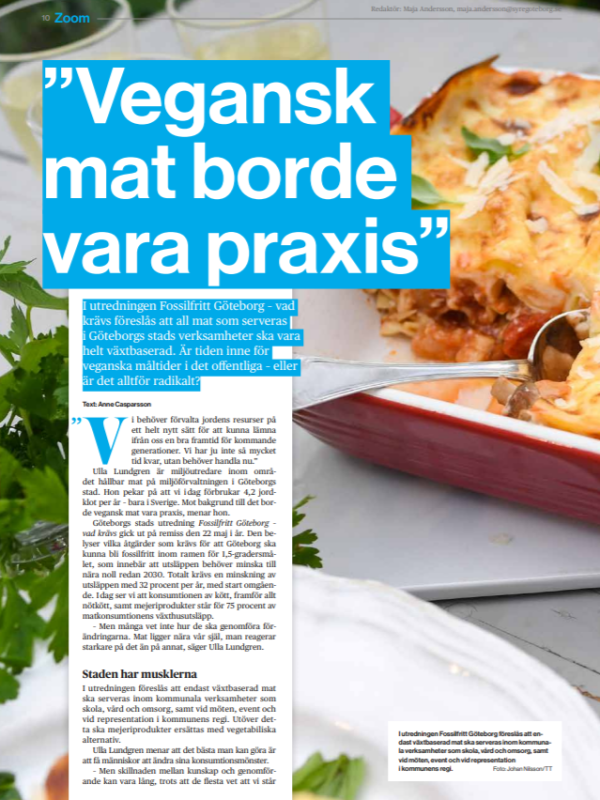
Vegansk mat borde vara praxis
Article

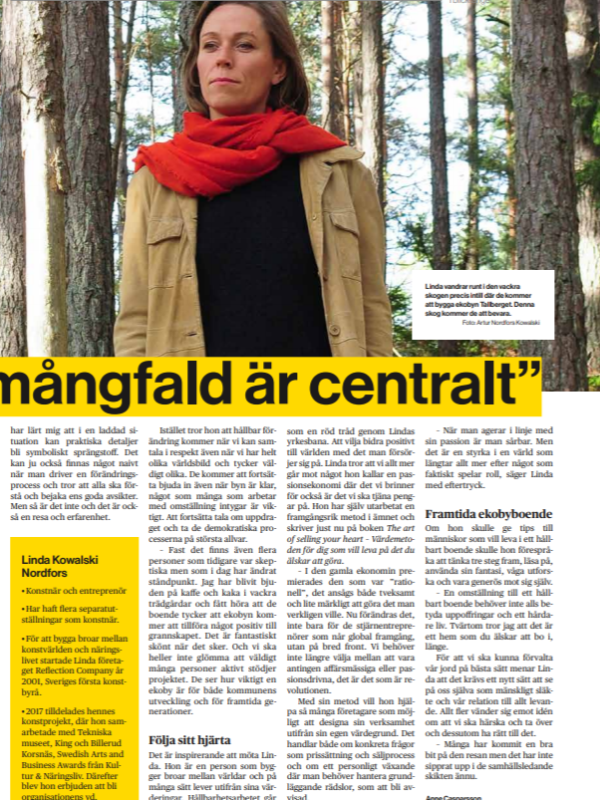

 Anne Casparsson